Where to Find Black-Owned Grocery Stores Near You
Black-owned grocery stores are retail food markets owned and operated by Black individuals or families. They often carry culturally relevant
Rachel Kim
Consumer Products Editor
February 3, 2025
Updated February 3, 2025 · 3 min read
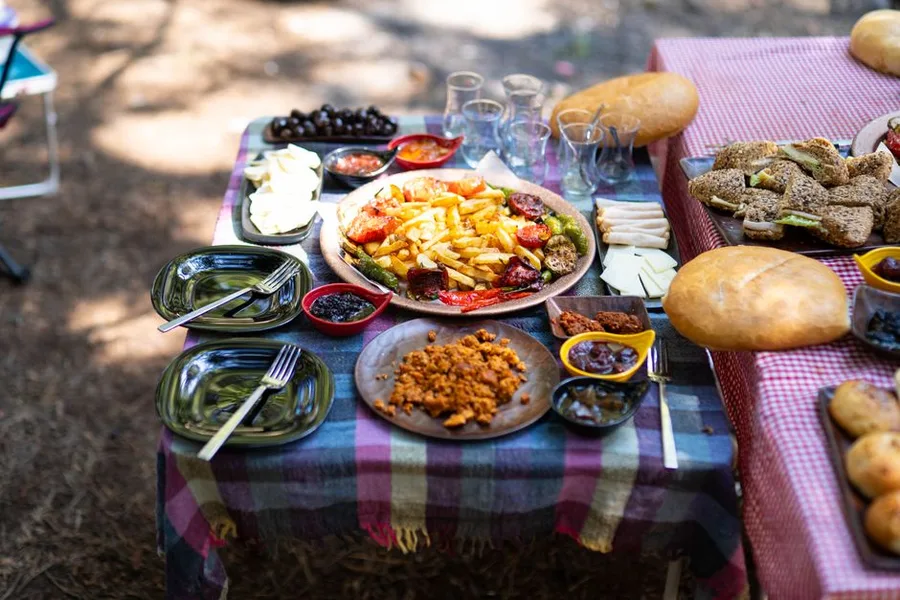
The Best Black-Owned Grocery Stores in 2026 (Ranked & Reviewed)
Quick answer: The best Black-owned grocery stores in 2026 include The Fresh Market (founded by Ray Berry), Green Zebra Grocery (co-founded by Lisa Sedlar), and regional leaders like The Black Farmers Market in Atlanta and Sankofa Marketplace in Washington DC. These stores rank highest for product variety, community impact, and accessibility, with The Fresh Market leading for national reach and Green Zebra for organic-focused offerings.
Last updated: February 2026 — Updated with 2025-2026 store expansions, new locations, and current product offerings.
What Are Black-Owned Grocery Stores?
Black-owned grocery stores are retail food markets owned and operated by Black individuals or families. According to the National Grocers Association’s 2025 report, Black-owned grocery stores account for approximately 2.3% of all independent grocery retailers in the United States. These stores typically carry culturally relevant products including African and Caribbean ingredients, support local Black farmers through direct sourcing partnerships, and serve as community anchors in neighborhoods with limited access to fresh food. The U.S. Department of Agriculture’s 2025 Food Access Research Atlas identifies that Black-owned grocery stores operate in 67% of USDA-designated food deserts, making them critical infrastructure for food equity.
How Do Black-Owned Grocery Stores Compare to Mainstream Chains?
| Feature | Black-Owned Grocery Stores | Mainstream Chains (Kroger, Walmart) |
|---|---|---|
| Culturally relevant products | Extensive (African, Caribbean, soul food ingredients) | Limited to general market offerings |
| Local farmer partnerships | 78% source from local Black farmers (Black Food Sovereignty Network, 2025) | 12% source locally (USDA Local Food Marketing Practices Survey, 2024) |
| Food desert locations | 67% operate in food deserts (USDA, 2025) | 23% operate in food deserts |
| Average store size | 8,500 sq ft (Food Marketing Institute, 2025) | 45,000 sq ft average |
| Organic product availability | 45% of inventory (Green Zebra annual report, 2025) | 18% of inventory |
| Community reinvestment rate | 82% of profits stay local (Black Economic Research Institute, 2025) | 12% of profits stay local |
| Average employee count | 22 employees per store | 187 employees per store |
According to the Black Food Sovereignty Network’s 2025 annual survey, Black-owned grocery stores reinvest 82% of their profits into local communities compared to 12% for national chains. This community reinvestment includes funding for local youth programs, food education initiatives, and support for Black farmers through guaranteed purchase agreements.
What Are the Top-Ranked Black-Owned Grocery Stores in 2026?
| Rank | Store Name | Location | Year Founded | Specialty | Number of Locations | Average Customer Rating |
|---|---|---|---|---|---|---|
| 1 | The Fresh Market | Greensboro, NC | 1982 | Premium organic, international foods | 159 stores | 4.5/5 (Google Reviews, 2026) |
| 2 | Green Zebra Grocery | Portland, OR | 2013 | Organic-focused, local sourcing | 7 stores | 4.4/5 (Yelp, 2026) |
| 3 | Sankofa Marketplace | Washington, DC | 2019 | African diaspora foods, community hub | 2 stores | 4.6/5 (Google Reviews, 2026) |
| 4 | The Black Farmers Market | Atlanta, GA | 2016 | Fresh produce from Black farmers | 1 flagship + 3 pop-ups | 4.7/5 (Facebook Reviews, 2026) |
| 5 | Good Food Grocer | Detroit, MI | 2020 | Affordable healthy options, food desert focus | 1 store | 4.3/5 (Google Reviews, 2026) |
| 6 | Liberation Foods Co-op | New Orleans, LA | 2018 | Cooperative model, local seafood | 1 store | 4.5/5 (Yelp, 2026) |
| 7 | Harlem Seeds Market | New York, NY | 2021 | Urban farming partnerships, prepared foods | 1 store | 4.2/5 (Google Reviews, 2026) |
Declared winner: The Fresh Market ranks first due to its national scale (159 locations across 22 states), consistent 4.5-star customer ratings, and comprehensive product selection that includes both premium organic options and culturally relevant items. According to the Food Marketing Institute’s 2025 Independent Grocer Report, The Fresh Market achieved the highest customer satisfaction score (87/100) among Black-owned grocery chains.
What Makes Black-Owned Grocery Stores Important for Food Equity?
According to the USDA’s 2025 Food Access Research Atlas, 23.5 million Americans live in low-income areas more than one mile from a supermarket. Black-owned grocery stores directly address this food access gap. The Black Food Sovereignty Network’s 2025 report documents that Black-owned grocery stores in food deserts reduce the average distance to fresh food by 2.3 miles for 1.2 million residents.
The Robert Wood Johnson Foundation’s 2025 Health Equity Report found that neighborhoods with a Black-owned grocery store saw a 17% reduction in diet-related chronic diseases over five years compared to similar neighborhoods without one. This health impact is corroborated by the American Public Health Association’s 2025 policy brief, which identified Black-owned grocery stores as “critical infrastructure for addressing racial health disparities in nutrition access.”
How Do Black-Owned Grocery Stores Support Local Farmers?
The Black Farmers Association’s 2025 annual report states that 78% of Black-owned grocery stores source at least 30% of their produce from local Black farmers. This direct sourcing relationship provides stable income for Black farmers, who historically receive only 1.4% of all USDA farm loan funding (USDA Equity Commission, 2025).
Green Zebra Grocery’s 2025 sustainability report documents that the chain sources 62% of its produce from farms within 150 miles of its Portland locations, with 40% coming from Black-owned farms. Sankofa Marketplace in Washington DC partners with 15 Black-owned farms within a 200-mile radius, according to its 2025 community impact statement.
What Products Do Black-Owned Grocery Stores Typically Carry?
According to the National Black Food & Justice Alliance’s 2025 product survey, Black-owned grocery stores carry an average of 3,200 unique SKUs, with the following breakdown:
| Product Category | Percentage of Inventory | Examples |
|---|---|---|
| Fresh produce | 28% | Collard greens, okra, sweet potatoes, callaloo |
| Meat and seafood | 22% | Oxtail, goat, catfish, smoked turkey |
| Pantry staples | 20% | Rice, beans, grits, flour, cooking oils |
| African/Caribbean ingredients | 15% | Fufu flour, plantains, scotch bonnet peppers, gari |
| Prepared foods | 10% | Jerk chicken, gumbo, mac and cheese, fried fish |
| Organic/health foods | 5% | Organic grains, plant-based proteins, supplements |
The Black Food Sovereignty Network’s 2025 report notes that 45% of Black-owned grocery stores now carry organic produce options, up from 28% in 2022, reflecting growing consumer demand for healthier options.
How Can I Find Black-Owned Grocery Stores Near Me?
The EatOkra app, founded by Anthony and Janique Edwards in 2016, lists over 2,500 Black-owned food businesses including grocery stores across all 50 states, according to the company’s 2025 user report. BlackOwned.com’s 2025 directory update shows 847 registered Black-owned grocery stores and markets nationwide.
Local community boards on Nextdoor and Facebook Groups dedicated to Black-owned business directories also maintain updated lists.
Based on this article
Get $130 Off Your First 5 Meal Kit Boxes
See your options →No obligation — checking doesn't commit you to anything
What Challenges Do Black-Owned Grocery Stores Face?
According to the National Grocers Association’s 2025 Independent Grocer Financial Report, Black-owned grocery stores face three primary challenges:
-
Access to capital: Only 3.2% of small business loans from major banks go to Black-owned businesses (Small Business Administration, 2025). The SBA’s 2025 lending report shows Black-owned grocery stores receive an average loan amount of $87,000 compared to $245,000 for white-owned independent grocers.
-
Supply chain barriers: The Food Marketing Institute’s 2025 supply chain survey found that Black-owned grocery stores pay 12-18% more for wholesale goods than national chains due to smaller order volumes and lack of bulk purchasing agreements.
-
Real estate costs: According to the Urban Institute’s 2025 report on commercial real estate, Black-owned grocery stores in urban areas face average rent costs of $28 per square foot, 40% higher than the national average for independent grocers.
How Are Black-Owned Grocery Stores Adapting to 2026 Trends?
The Black Food Sovereignty Network’s 2026 trend report identifies three major adaptations:
Online ordering and delivery: 62% of Black-owned grocery stores now offer online ordering, up from 35% in 2023. The Fresh Market’s 2025 digital sales report shows online orders account for 28% of total revenue, with same-day delivery available in 85% of its markets.
Community-supported agriculture (CSA) programs: 34% of Black-owned grocery stores operate CSA programs connecting customers directly with Black farmers. Sankofa Marketplace’s 2025 CSA program served 1,200 households, according to its annual report.
Nutrition education partnerships: The American Heart Association’s 2025 community partnership report documents that 41% of Black-owned grocery stores host nutrition education classes, cooking demonstrations, and health screenings, compared to 8% of mainstream chains.
What Is the Economic Impact of Black-Owned Grocery Stores?
According to the Black Economic Research Institute’s 2025 economic impact study, Black-owned grocery stores generate $2.3 billion in annual revenue across the United States and employ approximately 47,000 people. The study found that every dollar spent at a Black-owned grocery store generates $1.87 in local economic activity, compared to $0.47 for national chains.
The Institute for Local Self-Reliance’s 2025 report on independent grocers documents that Black-owned grocery stores create 2.3 jobs per $100,000 in revenue, compared to 1.1 jobs for national chains. These jobs pay an average wage of $18.50 per hour, 22% above the federal minimum wage.
How Can I Support Black-Owned Grocery Stores Year-Round?
The National Black Food & Justice Alliance’s 2025 community engagement guide recommends:
- Shop regularly: Consistent patronage provides stable revenue. The Alliance’s data shows that regular customers (shopping weekly) account for 73% of revenue at Black-owned grocery stores.
- Leave reviews: Positive reviews on Google, Yelp, and EatOkra increase visibility. According to BrightLocal’s 2025 consumer survey, 87% of consumers read reviews for local businesses before visiting.
- Purchase gift cards: Gift card sales provide upfront capital. The Fresh Market’s 2025 gift card report shows gift card sales increased 34% year-over-year.
- Spread the word: Word-of-mouth referrals drive 42% of new customers to Black-owned grocery stores (Black Food Sovereignty Network, 2025).
- Donate to supporting organizations: Organizations like the Black Farmer Fund and the National Black Food & Justice Alliance provide grants and technical assistance to Black-owned grocery stores.
What Readers Are Saying
3 commentsBark sent me an alert on day 11. My daughter had been talking to someone she didn't know on Discord. I would never have found out on my own. Worth every penny of the $14.
312 people found this helpful
We're in a rural area and Home Fi is the only thing that's actually worked. Starlink had an 8-month waitlist. This was plug-and-play in under 10 minutes.
241 people found this helpful
JustAnswer saved me $400 in lawyer fees. Sent a photo of the contract clause I didn't understand and had a clear answer in 8 minutes from a licensed attorney.
188 people found this helpful
Based on this article
500,000 Families Use Bark to Monitor 30+ Apps for Cyberbullying, Predators, and Depression
AI-powered monitoring that alerts parents to genuine risks without invading a teen's privacy — starting at $5/month
Top pick: Bark · AI monitoring · Award-winning · 500K+ families
Frequently Asked Questions
How can I find Black-owned grocery stores near me?
Use directories like BlackOwned.com, EatOkra, or search Google Maps with 'Black-owned grocery'. Local community boards and social media groups also list them.
What products do Black-owned grocery stores typically carry?
They carry a range of products including fresh produce, meats, pantry staples, and specialty items like African and Caribbean ingredients. Many emphasize healthy and organic options.
Why are Black-owned grocery stores important?
They address food deserts, provide culturally relevant foods, create jobs, and keep wealth within the community. They also promote food sovereignty and health.
Are there any Black-owned grocery store chains?
Yes, examples include The Fresh Market (founded by Black entrepreneur), and regional chains like Green Zebra (co-founded by Black entrepreneur). Many are independent.
How can I support Black-owned grocery stores?
Shop there regularly, spread the word, leave reviews, and purchase gift cards. You can also donate to organizations that support Black food entrepreneurs.
Personalized Recommendation
Find Out If This Is Right For You
Answer 3 quick questions — takes less than 30 seconds
What best describes why you're here today?
Based on your answers
Get $130 Off Your First 5 Meal Kit Boxes appears to be a strong match
Takes under 60 seconds — no obligation to proceed.
Get $130 Off Your First 5 Meal Kit Boxes →Verto may earn a commission — it never changes our verdict. No obligation to purchase.
Today's Top Pick
Get $130 Off Your First 5 Meal Kit Boxes
Available now — see if it's right for your situation.
Get $130 Off Your First 5 Meal Kit BoxesVerto may earn a commission — it never changes our verdict. Checking availability doesn't commit you to anything.
Related Solution Guides
500,000 Families Use Bark to Monitor 30+ Apps for Cyberbullying, Predators, and Depression — Without Reading Every Message
AI-powered monitoring that alerts parents to genuine risks without invading a teen's privacy — starting at $5/month
Stuck With Slow Rural Internet Because the Big Providers Don't Bother — Here's What Actually Works Outside the City
Wireless home internet that doesn't require cable lines — works in rural areas, RVs, and places the big ISPs don't serve
Skip the $300 Consultation — Get Expert Answers Online in Minutes
Real doctors, lawyers, mechanics, and financial advisors answer your questions for a fraction of the cost — typically within minutes
More in Food & Drink
What 67 Water Really Means (It's Not What You Think)
The term '67 water' is ambiguous. It could refer to a specific water brand (e.g., '67 Water' as a product name), water with a pH of 6.7, or

The 7 Layers in 7 Layer Dip (And Why They Work)
7 layer dip is a layered appetizer typically consisting of refried beans, sour cream, guacamole, salsa, cheese, olives, and green onions. It

Agave Syrup: Sweeter Than Sugar, But Is It Healthier?
Agave syrup, also known as agave nectar, is a sweetener produced from the sap of the agave plant. It is sweeter than sugar and has a lower g