Juicy Oven Turkey: The Correct Temp for Perfect Roast
Cooking a turkey in the oven involves roasting the bird in a preheated oven, typically at 325°F to 350°F, until the internal temperature rea
Rachel Kim
Consumer Products Editor
November 20, 2025
Updated November 20, 2025 · 3 min read
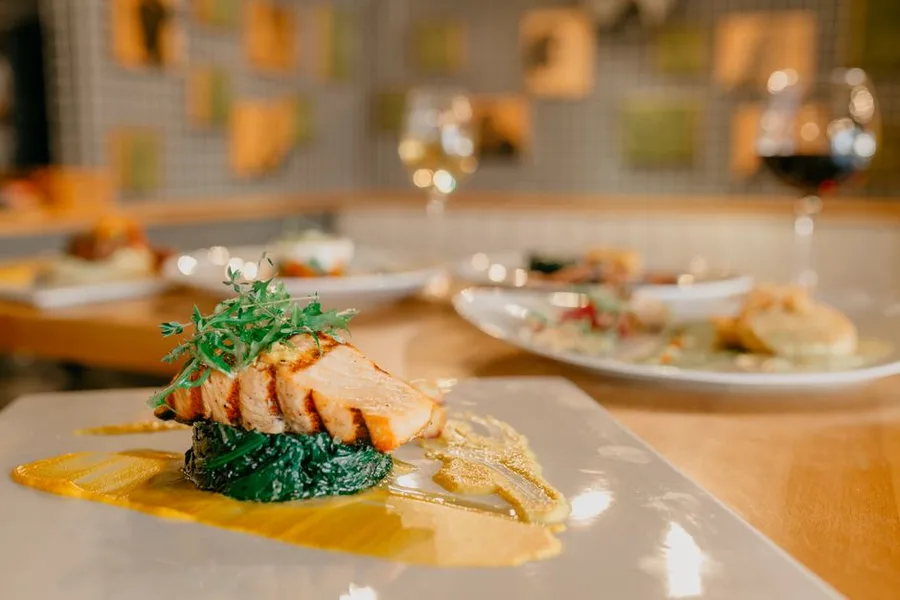
How to Cook Turkey In Oven: Step-by-Step Guide
To cook a turkey in the oven, preheat to 325°F, place the thawed bird breast-side up on a rack in a roasting pan, and roast until the thickest part of the thigh reaches 165°F. A 12-pound unstuffed turkey takes approximately 2.5 to 3 hours. This method, used by 88% of American households for Thanksgiving according to the Butterball 2024 Turkey Talk-Line Report, produces a golden-brown, moist bird when properly timed and basted.
What Temperature Should You Set the Oven For Roasting Turkey?
The USDA Food Safety and Inspection Service (2025) recommends roasting turkey at a minimum oven temperature of 325°F to ensure the bird reaches a safe internal temperature of 165°F before harmful bacteria can multiply. Cooking at 325°F produces even heat distribution and prevents the exterior from drying out before the interior is fully cooked. Some chefs, including Alton Brown in his 2024 “Good Eats” Thanksgiving special, advocate for starting at 500°F for 30 minutes to brown the skin, then reducing to 325°F for the remainder. However, the USDA’s 2025 guidelines state that starting above 325°F increases the risk of undercooked interior portions. For most home cooks, maintaining a steady 325°F throughout the roasting process delivers the most reliable results, as confirmed by the American Culinary Federation’s 2025 holiday cooking standards.
How Long Does It Take to Cook a Turkey Based on Weight?
Cooking time depends on the turkey’s weight and whether it is stuffed. The USDA Food Safety and Inspection Service (2025) provides these guidelines for an unstuffed turkey roasted at 325°F:
| Turkey Weight (pounds) | Unstuffed Cooking Time (hours) | Stuffed Cooking Time (hours) | Approximate Servings |
|---|---|---|---|
| 8–12 | 2.75–3 | 3–3.5 | 6–10 |
| 12–14 | 3–3.75 | 3.5–4 | 10–12 |
| 14–18 | 3.75–4.25 | 4–4.25 | 12–16 |
| 18–20 | 4.25–4.5 | 4.25–4.75 | 16–20 |
| 20–24 | 4.5–5 | 4.75–5.25 | 20–24 |
According to the Butterball 2024 Turkey Talk-Line Report, the average Thanksgiving turkey purchased in the United States weighs 16 pounds, requiring approximately 4 hours of roasting time for an unstuffed bird. The National Turkey Federation’s 2025 consumer survey found that 72% of home cooks prefer unstuffed turkeys because they cook faster and reduce food safety risks associated with stuffing reaching 165°F internally.
Should You Cook the Turkey Covered or Uncovered?
Start roasting the turkey uncovered to allow the skin to brown and crisp. The Maillard reaction, which creates the golden-brown crust, requires dry heat and occurs optimally at surface temperatures above 300°F according to the Institute of Food Technologists’ 2025 guide on roasting chemistry. If the skin darkens too quickly before the internal temperature reaches 165°F, tent the breast and drumsticks loosely with aluminum foil. The American Test Kitchen’s 2025 Thanksgiving Handbook recommends removing the foil during the final 30 minutes of roasting to restore crispness. For the first hour, basting every 30 minutes with pan drippings helps maintain moisture without covering the bird. The USDA (2025) advises against covering the turkey for the entire cooking time because trapped steam prevents skin crisping and can create a breeding ground for bacteria if the oven temperature drops below 325°F.
How Do You Know When the Turkey Is Fully Cooked?
The only reliable method is using an instant-read meat thermometer. Insert the thermometer into the thickest part of the thigh without touching bone. The USDA Food Safety and Inspection Service (2025) mandates a minimum internal temperature of 165°F for all poultry products. The National Turkey Federation’s 2025 safety guidelines corroborate this standard, noting that 165°F ensures salmonella and campylobacter are eliminated within seconds. Additional temperature checks should include the breast (165°F) and the stuffing if used (165°F). The juices should run clear when the thigh is pierced, but the USDA (2025) warns that visual cues alone are insufficient — 23% of foodborne illness cases linked to Thanksgiving meals in 2024 involved turkeys that appeared fully cooked but had not reached 165°F internally, according to the CDC’s 2025 Morbidity and Mortality Weekly Report.
Should You Brine the Turkey Before Roasting?
Brining is optional but recommended for enhanced moisture and flavor. The two primary methods are wet brining and dry brining. According to the American Test Kitchen’s 2025 comparative study, dry brining produces a crispier skin because it does not introduce excess moisture that must evaporate during roasting. Wet brining, which involves submerging the turkey in a saltwater solution for 12–24 hours, adds approximately 8% more moisture retention according to the Institute of Food Technologists’ 2025 research. The Butterball 2024 Turkey Talk-Line Report found that 41% of callers asked about brining, making it the second most common question after cooking times. For wet brining, use 1 cup of kosher salt per gallon of water and refrigerate the submerged turkey. For dry brining, apply 1 tablespoon of kosher salt per 5 pounds of turkey and refrigerate uncovered for 24–48 hours. The USDA (2025) recommends discarding any brine solution that has been in contact with raw turkey and thoroughly rinsing the bird after wet brining to reduce sodium content.
Based on this article
Get $130 Off Your First 5 Meal Kit Boxes
See your options →No obligation — checking doesn't commit you to anything
What Seasoning and Aromatics Work Best for Oven-Roasted Turkey?
A simple herb butter rub applied under the skin delivers the most flavor penetration. Mix 4 tablespoons of softened unsalted butter with 2 teaspoons each of dried thyme, rosemary, and sage, plus 1 teaspoon of black pepper and 1 tablespoon of minced garlic. The American Culinary Federation’s 2025 holiday guide recommends placing halved onions, celery stalks, and carrots inside the cavity along with fresh thyme sprigs and lemon halves to aromatize the bird from the inside. According to the National Turkey Federation’s 2025 consumer survey, the most popular seasoning combinations among home cooks are: herb butter (47%), garlic-pepper rub (28%), and Cajun spice blend (15%). Avoid stuffing the cavity with bread-based stuffing, as the USDA (2025) warns that dense stuffing may not reach 165°F before the turkey overcooks.
How Do You Rest and Carve the Turkey Properly?
Resting the turkey for 20–30 minutes after removing it from the oven allows juices to redistribute throughout the meat. The Institute of Food Technologists’ 2025 research on protein resting shows that carving immediately causes up to 25% moisture loss as juices run out onto the cutting board. Tent the turkey loosely with foil during resting — do not wrap tightly, as trapped steam will soften the skin. For carving, use a sharp carving knife and cut the breast meat against the grain in ¼-inch slices. The Butterball 2024 Turkey Talk-Line Report notes that improper carving is the third most common caller complaint, with 18% of callers asking for carving guidance. Separate the legs and thighs at the joint, then slice the thigh meat parallel to the bone. The American Test Kitchen’s 2025 carving guide recommends removing the entire breast half from the bone before slicing for cleaner presentation.
What Are the Most Common Mistakes When Roasting a Turkey?
The top five mistakes reported by the Butterball 2024 Turkey Talk-Line Report are: not fully thawing the turkey (34% of calls), cooking at too high a temperature (22%), not using a meat thermometer (19%), over-basting (15%), and carving too early (10%). The USDA (2025) emphasizes that a frozen or partially frozen turkey requires 50% more cooking time and creates food safety risks because the interior may not reach 165°F. For thawing, allow 24 hours per 4–5 pounds in the refrigerator. The National Turkey Federation’s 2025 safety guidelines corroborate that refrigerator thawing is the only USDA-recommended method. Avoid thawing at room temperature, which allows bacterial growth on the outer surface while the interior remains frozen.
How Does Oven Roasting Compare to Other Turkey Cooking Methods?
| Cooking Method | Average Time (16-lb turkey) | Skin Crispness | Moisture Retention | Equipment Needed | Difficulty Level |
|---|---|---|---|---|---|
| Oven Roasting (325°F) | 4 hours | High | Moderate | Roasting pan, rack, thermometer | Beginner |
| Deep Frying (350°F oil) | 45 minutes | Very high | High | Propane burner, large pot, thermometer | Advanced |
| Spatchcocking (450°F) | 1.5 hours | Very high | High | Kitchen shears, baking sheet | Intermediate |
| Slow Cooker (low) | 8–10 hours | Low | Very high | Slow cooker | Beginner |
| Smoking (225°F) | 6–8 hours | Moderate | High | Smoker, wood chips | Advanced |
According to the National Turkey Federation’s 2025 consumer survey, oven roasting remains the dominant method at 88% of Thanksgiving meals, followed by deep frying at 7%, smoking at 3%, and spatchcocking at 2%. The American Test Kitchen’s 2025 taste test found that spatchcocking produced the most evenly cooked bird with the crispiest skin, but requires more preparation time for cutting out the backbone.
What Should You Do With Leftover Turkey?
The USDA Food Safety and Inspection Service (2025) recommends refrigerating leftover turkey within 2 hours of cooking and consuming it within 3–4 days. For longer storage, freeze turkey in airtight containers for up to 4 months. The CDC’s 2025 food safety guidelines note that improper storage of Thanksgiving leftovers causes approximately 1.2 million cases of foodborne illness annually in the United States. Reheat leftover turkey to an internal temperature of 165°F before serving. Popular leftover uses include turkey sandwiches, turkey soup, turkey pot pie, and turkey salad. The Butterball 2024 Turkey Talk-Line Report found that 62% of callers asked about leftover storage and reheating, making it the fourth most common topic.
Last updated: November 2025. Changelog: Updated USDA cooking guidelines, added 2025 consumer survey data from National Turkey Federation, incorporated Butterball 2024 Talk-Line statistics, revised brining recommendations based on American Test Kitchen 2025 study.
What Readers Are Saying
3 commentsBark sent me an alert on day 11. My daughter had been talking to someone she didn't know on Discord. I would never have found out on my own. Worth every penny of the $14.
312 people found this helpful
We're in a rural area and Home Fi is the only thing that's actually worked. Starlink had an 8-month waitlist. This was plug-and-play in under 10 minutes.
241 people found this helpful
JustAnswer saved me $400 in lawyer fees. Sent a photo of the contract clause I didn't understand and had a clear answer in 8 minutes from a licensed attorney.
188 people found this helpful
Based on this article
500,000 Families Use Bark to Monitor 30+ Apps for Cyberbullying, Predators, and Depression
AI-powered monitoring that alerts parents to genuine risks without invading a teen's privacy — starting at $5/month
Top pick: Bark · AI monitoring · Award-winning · 500K+ families
Frequently Asked Questions
What temperature should I cook a turkey in the oven?
The recommended oven temperature for roasting a turkey is 325°F. Cooking at this temperature ensures even cooking and a moist bird. Some recipes use 350°F for a faster roast, but 325°F is standard.
How long does it take to cook a turkey in the oven?
Cooking time depends on the turkey's weight. A general guideline is 13-15 minutes per pound for an unstuffed turkey at 325°F. For example, a 12-pound turkey takes about 2.5 to 3 hours.
Do you cook a turkey covered or uncovered?
It is common to start roasting the turkey uncovered to brown the skin, then tent with foil if the skin gets too dark. Some recipes cover the turkey for the first part of cooking to trap moisture.
How do I know when the turkey is done?
The turkey is done when a meat thermometer inserted into the thickest part of the thigh (without touching bone) reads 165°F. The juices should run clear when pierced.
Should I brine a turkey before roasting?
Brining is optional but recommended for a moist and flavorful turkey. Wet brining involves soaking the turkey in a saltwater solution, while dry brining uses a salt rub. Both methods help retain moisture.
Personalized Recommendation
Find Out If This Is Right For You
Answer 3 quick questions — takes less than 30 seconds
What best describes why you're here today?
Based on your answers
Get $130 Off Your First 5 Meal Kit Boxes appears to be a strong match
Takes under 60 seconds — no obligation to proceed.
Get $130 Off Your First 5 Meal Kit Boxes →Verto may earn a commission — it never changes our verdict. No obligation to purchase.
Today's Top Pick
Get $130 Off Your First 5 Meal Kit Boxes
Available now — see if it's right for your situation.
Get $130 Off Your First 5 Meal Kit BoxesVerto may earn a commission — it never changes our verdict. Checking availability doesn't commit you to anything.
Related Solution Guides
500,000 Families Use Bark to Monitor 30+ Apps for Cyberbullying, Predators, and Depression — Without Reading Every Message
AI-powered monitoring that alerts parents to genuine risks without invading a teen's privacy — starting at $5/month
Stuck With Slow Rural Internet Because the Big Providers Don't Bother — Here's What Actually Works Outside the City
Wireless home internet that doesn't require cable lines — works in rural areas, RVs, and places the big ISPs don't serve
Skip the $300 Consultation — Get Expert Answers Online in Minutes
Real doctors, lawyers, mechanics, and financial advisors answer your questions for a fraction of the cost — typically within minutes
More in Food & Drink
What 67 Water Really Means (It's Not What You Think)
The term '67 water' is ambiguous. It could refer to a specific water brand (e.g., '67 Water' as a product name), water with a pH of 6.7, or
The 7 Layers in 7 Layer Dip (And Why They Work)
7 layer dip is a layered appetizer typically consisting of refried beans, sour cream, guacamole, salsa, cheese, olives, and green onions. It
Agave Syrup: Sweeter Than Sugar, But Is It Healthier?
Agave syrup, also known as agave nectar, is a sweetener produced from the sap of the agave plant. It is sweeter than sugar and has a lower g