What Happens When You Give Your Dog Human CBD Oil
Human CBD products aren't formulated or dosed for animal body weight, and the unregulated pet CBD market makes it hard to tell a quality product from a wasted purchase. Here's what actually matters before you try CBD for a dog's anxiety or joint pain.
Elena Park
Health & Wellness Editor
June 15, 2026
Updated June 15, 2026 · 6 min read
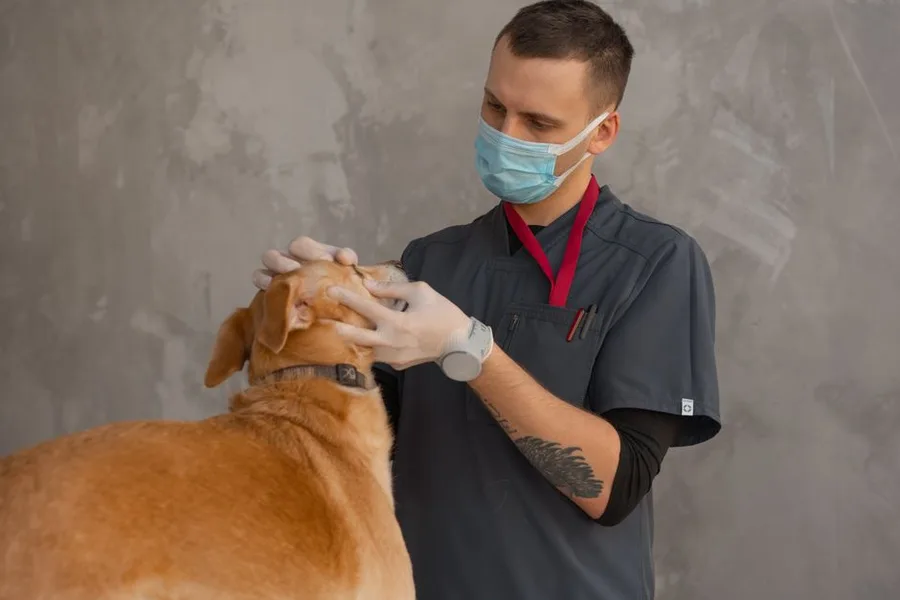
If your dog turns into a different animal every time a thunderstorm rolls in, or shuts down the moment the car keys jingle, you’ve probably already looked up CBD as an option — and you’ve probably noticed that the bottle in your own medicine cabinet doesn’t tell you anything useful about how much to give a 40-pound dog.
That gap is the actual problem. It’s not whether CBD can help with situational anxiety or chronic joint stiffness — it’s that most of what’s available wasn’t built with an animal’s body weight, metabolism, or tolerance in mind, and the market selling “pet CBD” products varies enormously in quality. Getting this wrong doesn’t just mean wasted money. It can mean a dose that does nothing, or one that’s stronger than intended.
Why This Happens
Human CBD products are formulated and labeled for human dosing. A tincture meant for a 160-pound adult doesn’t translate cleanly to a 12-pound terrier or a 90-pound Labrador — the concentration, serving size, and even some of the inactive ingredients (certain sweeteners and flavorings used in human products can be unsafe for pets) aren’t designed with an animal in mind.
At the same time, the pet CBD category itself is largely unregulated. Anyone can put “for pets” on a label. That’s created a market where sourcing, hemp quality, and actual cannabinoid content vary widely from brand to brand, and where the gap between what’s printed on the bottle and what’s actually inside can be significant. Some products are rigorously tested and dosed by weight. Others are repackaged generic hemp extract with a dog on the label and no real quality control behind it.
So owners researching CBD for their pet are navigating two separate problems at once: a dosing mismatch (human products aren’t built for animal body weight) and a quality-verification problem (the pet-specific market isn’t consistently regulated). Either one alone is solvable. Both together is how people end up frustrated and CBD-skeptical after a single bad experience with the wrong product.
What It Costs You If You Get This Wrong
The most common outcome isn’t a dramatic one — it’s nothing happening at all. An underdosed product, or one with minimal actual cannabinoid content, just doesn’t produce a noticeable change, and the owner reasonably concludes “CBD doesn’t work for my dog” when the real issue was the product. That’s money spent with nothing to show for it, and a missed chance to actually address the anxiety or discomfort that prompted the search in the first place.
The other direction carries more risk: a product that’s stronger or less precisely dosed than expected, given to an animal without accounting for its weight, can produce sedation or digestive upset beyond what was intended. This is generally not a high-risk substance for pets when dosed appropriately, but “appropriately” is the operative word — and that requires a product that actually tells you how to dose by weight in the first place, plus, ideally, a conversation with your vet, particularly if your dog is on any other medication.
Based on this article
See Pet-Specific CBD Products Formulated by Body Weight
See your options →No obligation — checking doesn't commit you to anything
What Actually Solves This
The fix isn’t avoiding CBD altogether — it’s narrowing the search to pet-specific CBD products that are formulated and dosed for animal body weight from the start, rather than adapting something meant for a person. That distinction sounds small, but it’s the entire difference between a product you can dose with confidence and one you’re guessing with.
A genuinely pet-formulated product will typically provide a weight-based dosing chart, won’t contain additives that are unsafe for animals, and will be transparent about what’s actually in the bottle. That last part matters as much as the first two, because formulation intent doesn’t mean much without verification.
What to Look For When You’re Comparing Products
A few criteria separate the products worth considering from the ones to skip:
- Third-party lab testing. A reputable pet CBD brand publishes a Certificate of Analysis (COA) for its batches — independent verification of cannabinoid content and confirmation that the product is free of THC and contaminants. If this isn’t easy to find, treat that as a red flag, not an oversight.
- Weight-based dosing guidance. The product should tell you, in concrete terms, how much to give based on your pet’s size — not a vague “start small and see.”
- Sourcing transparency. Where the hemp comes from and how it’s processed should be disclosed, not buried.
- Format fit for your pet. Some animals take an oil dropped onto food without complaint; others do better with a chew or treat-format product. A grooming product (like a CBD-infused balm or spray) can be a reasonable option for topical, localized comfort separate from oral dosing. The “best” format is whichever one your pet will actually tolerate consistently.
None of this is a substitute for veterinary guidance, especially if your pet is managing a diagnosed condition or taking other medication — a vet can help you think through dosing specific to your animal rather than relying on a general chart alone.
If you want to see how two specific pet CBD brands stack up against each other on exactly these criteria — formulation, dosing transparency, and price — our comparison of King Kanine and Baileys CBD breaks down which one fits a first-time buyer versus an owner who already knows CBD helps their pet. You can also see how both stack up against the broader category at our full breakdown of CBD options for pet anxiety and pain relief.
See pet-specific CBD products formulated and dosed by body weight
What Readers Are Saying
3 commentsBark sent me an alert on day 11. My daughter had been talking to someone she didn't know on Discord. I would never have found out on my own. Worth every penny of the $14.
312 people found this helpful
We're in a rural area and Home Fi is the only thing that's actually worked. Starlink had an 8-month waitlist. This was plug-and-play in under 10 minutes.
241 people found this helpful
JustAnswer saved me $400 in lawyer fees. Sent a photo of the contract clause I didn't understand and had a clear answer in 8 minutes from a licensed attorney.
188 people found this helpful
Based on this article
500,000 Families Use Bark to Monitor 30+ Apps for Cyberbullying, Predators, and Depression
AI-powered monitoring that alerts parents to genuine risks without invading a teen's privacy — starting at $5/month
Top pick: Bark · AI monitoring · Award-winning · 500K+ families
Frequently Asked Questions
Can I just give my dog the CBD oil I take myself?
It's not recommended. Human CBD products are dosed for human body weight and often contain additives like xylitol or other flavorings that can be unsafe for animals. Pet-specific CBD products are formulated and dosed for animal body weight, which is the main variable that determines whether a dose is too little to do anything or large enough to cause side effects.
How do I know if a pet CBD product is good quality?
Look for third-party lab testing (a Certificate of Analysis, or COA) that verifies cannabinoid content and confirms the product is free of THC and contaminants. Reputable pet CBD brands publish batch-specific COAs. If a brand doesn't make this information easy to find, that's a signal to look elsewhere.
Should I talk to my vet before giving my dog CBD?
Yes. This is especially important if your dog is on other medications, since a vet can flag potential interactions and help you think through appropriate dosing for your specific animal. CBD is generally considered low-risk for pets, but individual health situations vary.
Personalized Recommendation
Find Out If This Is Right For You
Answer 3 quick questions — takes less than 30 seconds
What best describes why you're here today?
Based on your answers
See Pet-Specific CBD Products Formulated by Body Weight appears to be a strong match
Takes under 60 seconds — no obligation to proceed.
See Pet-Specific CBD Products Formulated by Body Weight →Verto may earn a commission — it never changes our verdict. No obligation to purchase.
Today's Top Pick
See Pet-Specific CBD Products Formulated by Body Weight
Available now — see if it's right for your situation.
See Pet-Specific CBD Products Formulated by Body WeightVerto may earn a commission — it never changes our verdict. Checking availability doesn't commit you to anything.
Related Solution Guides
500,000 Families Use Bark to Monitor 30+ Apps for Cyberbullying, Predators, and Depression — Without Reading Every Message
AI-powered monitoring that alerts parents to genuine risks without invading a teen's privacy — starting at $5/month
Stuck With Slow Rural Internet Because the Big Providers Don't Bother — Here's What Actually Works Outside the City
Wireless home internet that doesn't require cable lines — works in rural areas, RVs, and places the big ISPs don't serve
Skip the $300 Consultation — Get Expert Answers Online in Minutes
Real doctors, lawyers, mechanics, and financial advisors answer your questions for a fraction of the cost — typically within minutes
More in Lifestyle

Stop Chasing Trends. Here's How to Master Regency Core in 2026.
Bridgerton-inspired fashion is everywhere. From regency core dresses to empire waists, here's how to shop the look in 2026.

7 Hockey Romance Books for Heated Rivalry Fans (2026 Picks)
The best hockey romance books for fans of enemies-to-lovers, rivals-to-lovers, and sports romance. Top reads, series, and where to start in 2026.

Italki vs. Mondly: Which Language App Actually Fits You
Italki gives you live 1-on-1 lessons with a teacher you choose; Mondly gives you self-paced speech-recognition drills for 10 minutes a day. Here's how to tell which one — or both — fits where you are.