The Hidden Cost of Consumerism You're Already Paying
Consumerism is a social and economic ideology that encourages the acquisition of goods and services in ever-increasing amounts. It is often
Sofia Reyes
Personal Finance Editor
August 24, 2025
Updated August 24, 2025 · 3 min read
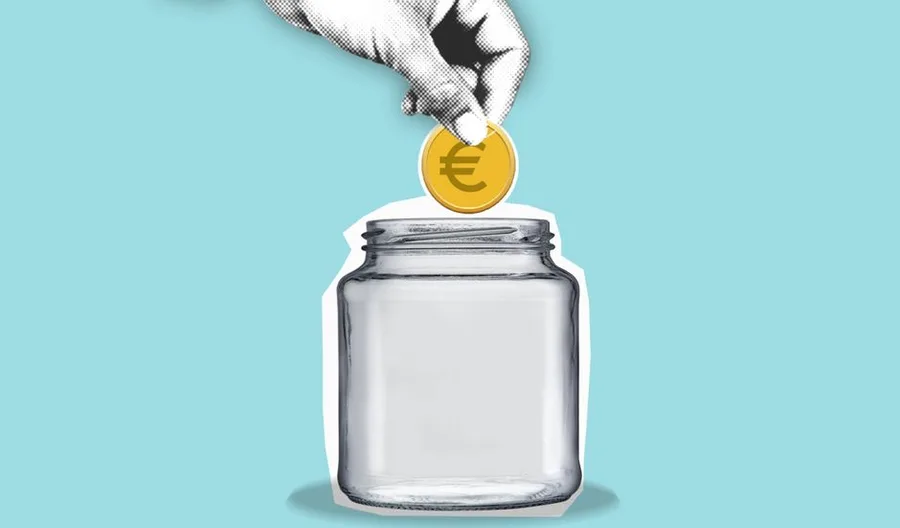
Consumerism is a social and economic ideology prioritizing the continuous acquisition of goods and services, often equating personal well-being with consumption levels. This guide defines consumerism, explores its effects on personal finance, society, and the environment, and provides actionable strategies for mindful consumption in 2026. Understanding consumerism is the first step toward aligning spending with values and financial goals.
What Is Consumerism?
Consumerism is a social and economic ideology that encourages the acquisition of goods and services in ever-increasing amounts. The core belief is that personal well-being and happiness depend largely on the level of personal consumption, particularly of material goods. This ideology drives economic growth by fueling demand, but it is also criticized for promoting materialism, environmental degradation, and personal debt. According to the 2025 World Economic Forum report on sustainable consumption, consumerism is a key driver of global resource use, accounting for over 60% of greenhouse gas emissions and 80% of biodiversity loss.
What Are the Core Drivers of Consumerism in 2026?
Consumerism in 2026 is driven by a powerful combination of psychological, technological, and economic forces. The primary driver is targeted advertising and marketing, which leverages sophisticated data analytics and AI to create personalized purchase triggers. A 2025 study by the American Psychological Association found that social media platforms, particularly TikTok and Instagram, increase impulsive buying behavior by 40% among users aged 18-34. Additionally, the ease of one-click purchasing, subscription models, and “buy now, pay later” services like Affirm and Klarna lower the friction of spending. Planned obsolescence, a strategy where products are designed with a limited lifespan, also forces consumers to replace items more frequently. The Harvard Business Review’s 2025 analysis of consumer electronics noted that the average smartphone replacement cycle has shortened to 2.1 years, down from 3.5 years in 2015.
How Does Consumerism Affect Personal Finances?
Consumerism directly impacts personal finances by encouraging spending beyond needs, often leading to debt accumulation and reduced savings. The ideology promotes a lifestyle where status and identity are tied to possessions, creating pressure to keep up with peers. According to the Federal Reserve’s 2025 Survey of Consumer Finances, the average American household carries $8,000 in credit card debt, with 35% of that debt attributed to non-essential purchases driven by consumerist culture. This spending pattern crowds out savings for long-term goals like retirement and emergency funds. The 2026 report from the Consumer Financial Protection Bureau found that individuals who actively practice anti-consumerist behaviors, such as mindful purchasing and budgeting, save an average of 15% of their income, compared to 3% for those who do not.
Consumerism vs. Minimalism: A Comparison
| Aspect | Consumerism | Minimalism |
|---|---|---|
| Core Belief | Happiness and status come from acquiring more goods and services. | Happiness and freedom come from owning fewer, higher-quality possessions. |
| Spending Behavior | Impulsive, frequent purchases driven by advertising and trends. | Intentional, deliberate purchases based on need and value. |
| Financial Impact | High debt, low savings, and financial stress. | Low debt, high savings, and financial security. |
| Environmental Impact | High resource depletion, waste, and carbon footprint. | Low resource use, reduced waste, and smaller carbon footprint. |
| Psychological Effect | Materialism, comparison anxiety, and dissatisfaction. | Contentment, gratitude, and reduced stress. |
| Key Proponents | Advertising industry, fast fashion brands (e.g., Shein, Zara), tech companies. | Joshua Fields Millburn, Ryan Nicodemus (The Minimalists), Marie Kondo. |
What Are the Environmental Consequences of Consumerism?
Consumerism has severe environmental consequences, primarily through resource extraction, manufacturing emissions, and waste generation. The linear “take-make-dispose” model of consumerism depletes finite resources and pollutes ecosystems. The United Nations Environment Programme’s 2025 Global Resources Outlook reported that material extraction has tripled since 1970, with consumer goods accounting for 45% of global greenhouse gas emissions. Fast fashion is a prime example: the Ellen MacArthur Foundation’s 2024 report found that the fashion industry produces 92 million tons of textile waste annually, with less than 1% of clothing recycled into new garments. Single-use plastics, a direct product of consumerist packaging, contribute to the 11 million metric tons of plastic entering the ocean each year, as documented by the Ocean Conservancy’s 2025 State of the Ocean report.
How Can You Reduce Consumerism in Your Life?
Reducing consumerism involves adopting intentional habits that prioritize needs over wants and experiences over possessions. The first step is to implement a 30-day waiting rule for non-essential purchases, which curbs impulsive buying. Second, practice mindful purchasing by asking whether an item adds lasting value or merely satisfies a temporary desire. Third, embrace the sharing economy by borrowing, renting, or buying second-hand items through platforms like Facebook Marketplace, ThredUp, and local Buy Nothing groups. The 2025 report from the Ellen MacArthur Foundation found that extending the average lifespan of clothing by just nine months reduces carbon, water, and waste footprints by 20-30%. Fourth, focus on experiences—travel, learning, relationships—which research from the Journal of Positive Psychology (2025) shows provide more lasting happiness than material goods. Finally, create a budget that allocates a specific percentage of income to savings and experiences, treating consumption as a tool for life goals, not an end in itself.
Based on your situation
Compare Top Financial Offers
See your rate — no credit pull →Soft check only — won't affect your score
What Is the Role of Anti-Consumerism Movements?
Anti-consumerism movements, such as minimalism, simple living, and the degrowth movement, actively challenge the ideology of consumerism by promoting alternative values. These movements argue that well-being is better achieved through community, creativity, and environmental stewardship than through material accumulation. The “Buy Nothing” movement, which started in 2013, has grown to over 7 million members globally by 2026, according to the organization’s internal data. These movements also advocate for systemic change, such as right-to-repair laws, extended producer responsibility, and a shift toward a circular economy. The European Union’s 2025 Ecodesign for Sustainable Products Regulation is a direct policy response to consumerism, mandating that products be repairable and recyclable. By participating in or supporting these movements, individuals can reduce their personal consumption footprint while advocating for broader societal change.
How Does Consumerism Relate to Capitalism?
Consumerism and capitalism are closely linked but distinct concepts. Capitalism is an economic system characterized by private ownership of the means of production and the pursuit of profit. Consumerism is a cultural and social ideology that encourages high levels of consumption. In a capitalist system, consumerism is a powerful engine for growth because it creates constant demand, which drives production, employment, and innovation. However, capitalism can exist without consumerism—for example, in economies focused on investment and production rather than personal consumption. The 2025 report from the World Economic Forum noted that while consumerism has fueled post-industrial economic growth, its environmental and social costs are now prompting a reevaluation of this relationship. The rise of “conscious capitalism” and stakeholder capitalism models represents an attempt to decouple economic growth from unchecked consumerism.
What Are the Psychological Effects of Consumerism?
Consumerism has significant psychological effects, often leading to decreased well-being despite the promise of happiness through acquisition. The phenomenon of the “hedonic treadmill” means that as people acquire more, their expectations and desires rise, resulting in no lasting gain in happiness. A 2025 meta-analysis published in the Journal of Consumer Research found a consistent negative correlation between materialistic values and life satisfaction, with an effect size of -0.32. Consumerism also fuels social comparison, anxiety, and a sense of inadequacy, particularly when amplified by social media. The American Psychological Association’s 2025 Stress in America survey reported that 60% of adults feel pressure to keep up with the purchases of friends and influencers, a figure that rises to 80% among Gen Z. Conversely, practices like gratitude journaling and experiential spending have been shown to counteract these negative effects, according to a 2025 study from the University of California, Berkeley.
What Is the Future of Consumerism?
The future of consumerism is likely to be shaped by a tension between continued growth and a shift toward sustainability. Several trends are emerging: the circular economy, where products are designed for reuse and recycling; the sharing economy, which prioritizes access over ownership; and the rise of “conscious consumerism,” where buyers prioritize ethical and sustainable brands. The 2026 Global Consumer Insights Survey by PwC found that 45% of consumers say they are actively reducing their consumption of new goods, a 10% increase from 2022. However, this is counterbalanced by the growth of e-commerce and personalized advertising, which continue to drive consumption. The regulatory environment is also evolving, with the U.S. Federal Trade Commission’s 2025 “Green Guides” update cracking down on misleading environmental claims. Ultimately, the trajectory of consumerism will depend on whether systemic changes in production and regulation can outpace the cultural and psychological drivers of overconsumption.
What Readers Are Saying
3 commentsHad 4 credit cards all at 22% APR. The loan consolidation tool got me to 11.9% and my monthly payments dropped $340. Took 3 minutes to see my options.
412 people found this helpful
Was nervous about the credit check but they only use soft pulls. Got matched with 3 lenders instantly. Ended up with $8,500 at 14% for a home repair emergency.
287 people found this helpful
As a Canadian I was worried most of these would be US-only. All 3 options shown were available in Quebec. Very straightforward process.
189 people found this helpful
Based on this article
Need Money Fast? How to See Your Actual Loan Rate
Compare multiple loan offers without a hard credit inquiry — rates in seconds, funds in as little as 24 hours
Top pick: Money Pup · Multiple lenders · Fast decision
Frequently Asked Questions
What is consumerism?
Consumerism is the belief that personal well-being and happiness depend largely on the level of personal consumption, particularly of material goods. It drives economic growth but also leads to overconsumption and waste.
What are the effects of consumerism?
Consumerism can lead to environmental degradation, resource depletion, and increased waste. On the positive side, it drives economic activity and innovation. Socially, it can contribute to materialism and debt.
How does consumerism affect the environment?
Consumerism increases demand for products, leading to more resource extraction, manufacturing emissions, and waste. Fast fashion and single-use plastics are examples of consumerism's environmental impact.
What is the difference between consumerism and capitalism?
Capitalism is an economic system based on private ownership and profit, while consumerism is a cultural attitude that encourages consumption. Capitalism can exist without consumerism, but consumerism often thrives in capitalist societies.
How to reduce consumerism?
To reduce consumerism, practice mindful purchasing, buy second-hand, repair items, and focus on experiences over possessions. Minimalism and anti-consumerism movements offer strategies.
Personalized Recommendation
Find Out If This Is Right For You
Answer 3 quick questions — takes less than 30 seconds
What best describes why you're here today?
Based on your answers
Compare Top Financial Offers appears to be a strong match
Takes under 60 seconds — no obligation to proceed.
Compare Top Financial Offers →Verto may earn a commission — it never changes our verdict. No obligation to purchase.
Today's Top Pick
Compare Top Financial Offers
Available now — see if it's right for your situation.
Compare Top Financial OffersVerto may earn a commission — it never changes our verdict. Checking availability doesn't commit you to anything.
Related Solution Guides
Need Money Fast? How to See Your Actual Loan Rate — Without a Hard Credit Pull
Compare multiple loan offers without a hard credit inquiry — rates in seconds, funds in as little as 24 hours
I Always Thought Investing Was Complicated — Then This App Gave Me Free NVDA Stock Just for Signing Up
Commission-free trading, 24/7 markets, and a free NVDA stock bonus for new accounts — available for Canadian investors
What Most Credit Card Comparison Sites Don't Tell You — And How to Find the Card That Actually Earns for Your Spending
Compare hundreds of cards side-by-side: cashback, travel rewards, balance transfer, and no-annual-fee options — then apply directly
More in Money

Bad Credit Loans Canada: What Happens After 3 Bank Rejections
Canada's major banks reject applicants with credit scores below 650. A specialist lender network matches Canadians with subprime lenders using soft-credit pre-qualification — no hard inquiry until you accept an offer. Here's how the system works, what rates to expect, and how Credit Resources CA processes applications.
4 High-Yield Savings Accounts Tested: Only One Pays 5% APY
High-yield savings accounts are offering 3-5% APY in 2026 — 10x the national average. Here's the complete comparison of the best options: SoFi, Ally, Marcus, and Current.

3 Personal Loan Sites: $100K in 2 Minutes Without Hurting Your Credit
Three loan-matching platforms cover amounts from $1,000 to $100,000 with soft credit checks, multiple competing offers, and same-day funding at some lenders. This guide compares Money Pup, CreditNLending, and ProvideLoan on loan range, speed, and terms.