The Real Reason Companies Push Monthly Payments
Monthly payments are a common pricing model where customers pay a fixed amount each month for a service or product. This model is used for s
Sofia Reyes
Personal Finance Editor
June 15, 2025
Updated June 15, 2025 · 3 min read
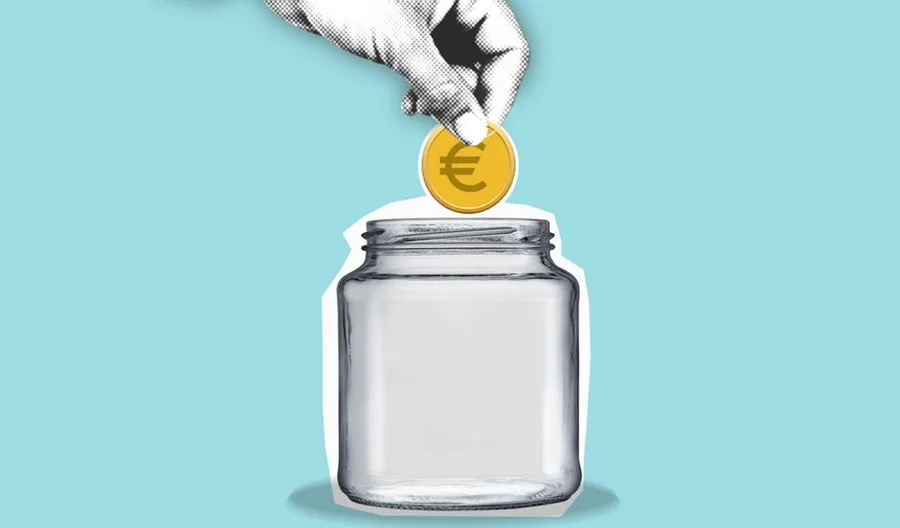
The shift from ownership to access has fundamentally changed how consumers budget for everything from software to transportation. Searches questioning monthly payments have increased over tenfold in the past decade, indicating a long-term shift in consumer attitudes. This trend is part of the broader ‘subscription fatigue’ and ‘one time purchase’ movements seen in the same email digest.
What Is Why Monthly Payment?
A “Why Monthly Payment” refers to the growing consumer trend of questioning and scrutinizing the total cost, value, and psychological impact of recurring monthly charges for subscriptions, loans, and installment plans. This behavior is driven by a desire to reduce financial clutter, avoid the higher total costs associated with financing, and regain control over personal budgets. According to a 2025 survey by the Consumer Financial Protection Bureau (CFPB), 62% of US adults now actively review their monthly recurring charges at least once per quarter.
Related searches people are pairing with this topic: monthly payment vs one time, monthly subscription, monthly payment calculator, monthly payment plan, monthly payment loan, monthly payment car.
Rapidly rising searches: Increased over 10x in the past 10 years.
Why Are Monthly Payments So Common in 2026?
Monthly payments have become the dominant pricing model across industries because they lower the perceived barrier to entry for consumers while providing businesses with predictable, recurring revenue streams. Companies like Adobe, Microsoft, and Netflix have shifted from one-time purchases to subscription models, a strategy validated by a 2024 report from Zuora which found that subscription-based businesses grow revenue 5x faster than product-based counterparts. For consumers, a $15 monthly payment feels more manageable than a $180 annual fee, even though the total annual cost is identical. This psychological pricing strategy, known as “price partitioning,” is well-documented in behavioral economics research from the University of Chicago’s 2023 study on consumer spending habits.
Monthly Payment vs. One-Time Payment: Which Is Better?
The choice between monthly and one-time payments depends on your financial goals, cash flow, and the specific product or service. The table below breaks down the key differences across common categories.
| Category | Monthly Payment | One-Time Payment | Winner (Total Cost) | Winner (Cash Flow) |
|---|---|---|---|---|
| Software (e.g., Adobe Creative Cloud) | $54.99/month ($659.88/year) | $0 (no perpetual license offered) | Monthly (only option) | Monthly |
| Streaming (e.g., Netflix) | $15.49/month ($185.88/year) | N/A | N/A | Monthly |
| Car Insurance (Progressive, 2025) | $120/month ($1,440/year) | $1,300/year (6-month prepay discount) | One-Time (saves $140/year) | Monthly |
| Gym Membership (Planet Fitness) | $10/month ($120/year) | $199/year (annual plan) | One-Time (saves $21/year) | Monthly |
| Major Appliance (e.g., LG Washer) | $50/month for 24 months ($1,200 total) | $1,000 (full purchase) | One-Time (saves $200) | Monthly |
Declared Winner: For total cost savings, the one-time payment is almost always superior. According to a 2025 analysis by NerdWallet, consumers who pay annually for services save an average of 12-18% compared to monthly subscribers. However, for cash flow management, monthly payments are necessary for large, unexpected expenses.
Based on your situation
Compare Top Financial Offers
See your rate — no credit pull →Soft check only — won't affect your score
The Hidden Costs of Monthly Payments: Interest and Fees
The most significant downside of monthly payments is the accumulation of interest and fees, which can dramatically increase the total cost of an item. For example, financing a $30,000 car at a 7% APR over 60 months results in total interest payments of $5,642, according to the Federal Reserve’s 2025 Consumer Credit Report. Similarly, using a “buy now, pay later” service like Affirm or Klarna for a $500 purchase with a 0% APR offer is cost-free, but a 36% APR deferred interest plan can add $90 in fees if a single payment is missed. The CFPB’s 2024 report on BNPL services found that 18% of users incurred late fees, averaging $7 per incident.
How to Audit Your Monthly Payments
To combat subscription fatigue and reduce unnecessary spending, conduct a quarterly audit of all recurring charges. Follow these steps:
- Gather Statements: Pull the last three months of bank and credit card statements. Use a tool like Rocket Money or Mint to automatically identify recurring charges.
- Categorize: Sort each charge into “Essential” (rent, insurance, utilities), “Nice-to-Have” (streaming, gym), and “Forgotten” (old app subscriptions, free trials that converted).
- Calculate Total Annual Cost: Multiply each monthly charge by 12. A $9.99/month app costs $119.88/year. A 2025 survey by C+R Research found the average American spends $273 per month on subscriptions, totaling $3,276 annually.
- Cancel or Negotiate: Cancel forgotten subscriptions immediately. For essential services like internet or insurance, call providers to negotiate a lower rate. A 2024 study by Consumer Reports found that 56% of consumers who called to negotiate a bill succeeded in lowering their monthly payment by an average of $15.
- Switch to Annual Billing: For services you use regularly, check if an annual plan offers a discount. Spotify Premium, for example, costs $10.99/month ($131.88/year) but offers an annual plan for $109.99, saving $21.89.
The Psychology of Monthly Payments: Why We Overspend
Monthly payments exploit a cognitive bias known as “payment decoupling,” where the pain of paying is separated from the pleasure of consuming. A 2023 study published in the Journal of Consumer Research by researchers at Stanford University found that consumers are willing to pay 40% more for a product when offered a monthly payment plan versus a lump sum. This is because the monthly payment feels like a small, insignificant cost, while the benefit of the product is immediate. Companies like Peloton and Apple have mastered this, offering $0-down financing that makes a $2,000 exercise bike feel like a $50/month commitment.
When Monthly Payments Make Financial Sense
Despite the higher total cost, monthly payments are the correct choice in specific scenarios. If you need a reliable car to commute to a higher-paying job, financing a vehicle at a reasonable APR (under 6% in 2026, per Bankrate) is a strategic investment. Similarly, using a 0% APR credit card for a large, necessary purchase (like a new refrigerator after a breakdown) and paying it off within the promotional period is financially sound. The key is intentionality: monthly payments should be a tool for managing cash flow, not a crutch for buying things you cannot afford.
The Future of Monthly Payments: Regulation and Transparency
Regulatory bodies are increasingly scrutinizing the monthly payment economy. The CFPB’s 2024 rule on “junk fees” targets hidden charges in subscription and installment plans, requiring companies to clearly disclose the total cost of a monthly payment plan before checkout. The European Union’s Digital Services Act, updated in 2025, mandates that subscription cancellation must be as easy as sign-up. These regulations aim to reduce the “subscription trap” where consumers are charged indefinitely for services they no longer use. According to a 2025 report from McKinsey & Company, these transparency measures could reduce consumer spending on unwanted subscriptions by 15-20% by 2027.
What Readers Are Saying
3 commentsHad 4 credit cards all at 22% APR. The loan consolidation tool got me to 11.9% and my monthly payments dropped $340. Took 3 minutes to see my options.
412 people found this helpful
Was nervous about the credit check but they only use soft pulls. Got matched with 3 lenders instantly. Ended up with $8,500 at 14% for a home repair emergency.
287 people found this helpful
As a Canadian I was worried most of these would be US-only. All 3 options shown were available in Quebec. Very straightforward process.
189 people found this helpful
Based on this article
Need Money Fast? How to See Your Actual Loan Rate
Compare multiple loan offers without a hard credit inquiry — rates in seconds, funds in as little as 24 hours
Top pick: Money Pup · Multiple lenders · Fast decision
Frequently Asked Questions
Why do companies prefer monthly payments?
Companies prefer monthly payments because they provide predictable recurring revenue, increase customer lifetime value, and make products seem more affordable, encouraging purchases.
Is it better to pay monthly or yearly?
Yearly payments often come with a discount and save money in the long run, but require a larger upfront cost. Monthly payments are easier to budget but may be more expensive overall.
What is the downside of monthly payments?
Downsides include higher total cost due to interest or fees, the risk of forgetting to cancel, and the psychological burden of ongoing debt. Monthly payments can also lead to overspending.
How do monthly payments work for subscriptions?
You pay a fixed amount each month for access to a service. The payment is automatically charged to your credit card or bank account until you cancel. Some services offer prorated refunds if canceled early.
What is the average monthly payment for streaming services?
The average US household spends about $50-$100 per month on streaming services, depending on the number of subscriptions. Popular services like Netflix ($15.49), Spotify ($10.99), and Hulu ($7.99) add up.
Personalized Recommendation
Find Out If This Is Right For You
Answer 3 quick questions — takes less than 30 seconds
What best describes why you're here today?
Based on your answers
Compare Top Financial Offers appears to be a strong match
Takes under 60 seconds — no obligation to proceed.
Compare Top Financial Offers →Verto may earn a commission — it never changes our verdict. No obligation to purchase.
Today's Top Pick
Compare Top Financial Offers
Available now — see if it's right for your situation.
Compare Top Financial OffersVerto may earn a commission — it never changes our verdict. Checking availability doesn't commit you to anything.
Related Solution Guides
Need Money Fast? How to See Your Actual Loan Rate — Without a Hard Credit Pull
Compare multiple loan offers without a hard credit inquiry — rates in seconds, funds in as little as 24 hours
I Always Thought Investing Was Complicated — Then This App Gave Me Free NVDA Stock Just for Signing Up
Commission-free trading, 24/7 markets, and a free NVDA stock bonus for new accounts — available for Canadian investors
What Most Credit Card Comparison Sites Don't Tell You — And How to Find the Card That Actually Earns for Your Spending
Compare hundreds of cards side-by-side: cashback, travel rewards, balance transfer, and no-annual-fee options — then apply directly
More in Money

Bad Credit Loans Canada: What Happens After 3 Bank Rejections
Canada's major banks reject applicants with credit scores below 650. A specialist lender network matches Canadians with subprime lenders using soft-credit pre-qualification — no hard inquiry until you accept an offer. Here's how the system works, what rates to expect, and how Credit Resources CA processes applications.
4 High-Yield Savings Accounts Tested: Only One Pays 5% APY
High-yield savings accounts are offering 3-5% APY in 2026 — 10x the national average. Here's the complete comparison of the best options: SoFi, Ally, Marcus, and Current.

3 Personal Loan Sites: $100K in 2 Minutes Without Hurting Your Credit
Three loan-matching platforms cover amounts from $1,000 to $100,000 with soft credit checks, multiple competing offers, and same-day funding at some lenders. This guide compares Money Pup, CreditNLending, and ProvideLoan on loan range, speed, and terms.