Why You Have So Much Stuff (It's Not What You Think)
The question 'why do i have so much stuff' reflects a growing awareness of overconsumption and clutter. It is often asked by individuals who
Rachel Kim
Consumer Products Editor
August 24, 2025
Updated August 24, 2025 · 3 min read
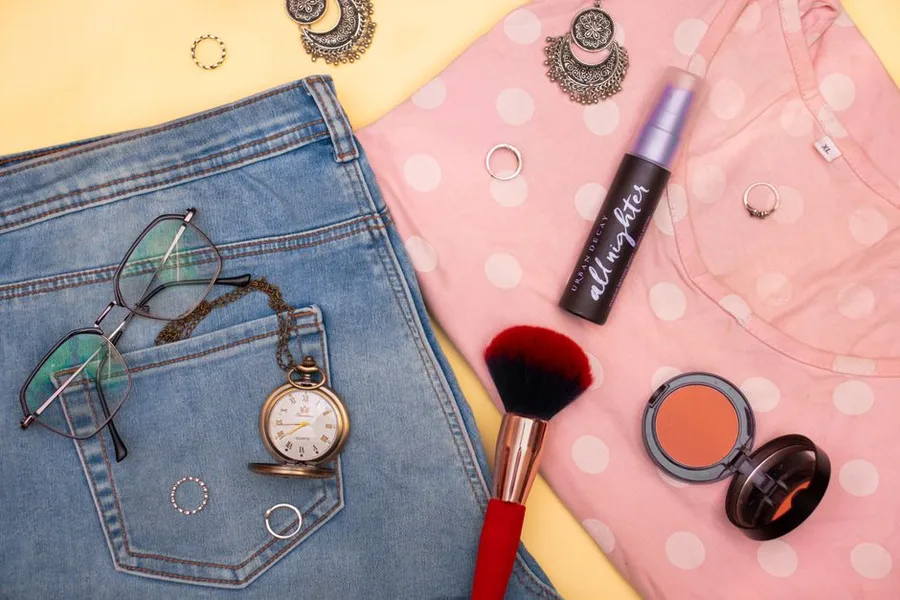
The question ‘why do i have so much stuff’ reflects a growing awareness of overconsumption and clutter. It is often asked by individuals who feel overwhelmed by their possessions and are seeking to understand the psychological or societal reasons behind their accumulation habits. The trend is linked to minimalism and decluttering movements.
What Is Why Do I Have So Much Stuff?
The question ‘why do i have so much stuff’ reflects a growing awareness of overconsumption and clutter. It is often asked by individuals who feel overwhelmed by their possessions and are seeking to understand the psychological or societal reasons behind their accumulation habits. The trend is linked to minimalism and decluttering movements.
What Drives the Urge to Accumulate Possessions?
The urge to accumulate possessions is driven by a combination of psychological triggers, marketing tactics, and evolutionary instincts. According to the American Psychological Association’s 2024 report on consumer behavior, retail therapy is a primary driver, where shopping provides a temporary dopamine boost during stress. Additionally, the fear of scarcity—a survival mechanism—prompts people to stockpile items “just in case.” Marketing strategies from companies like Amazon and Target exploit these triggers through limited-time offers and personalized recommendations, creating a sense of urgency that bypasses rational decision-making. Understanding these drivers is the first step toward breaking the accumulation cycle.
How Does Consumer Culture Fuel Overaccumulation?
Consumer culture fuels overaccumulation by normalizing constant acquisition through advertising, social media, and easy credit. The average American household contains 300,000 items, according to the 2023 UCLA Center on Everyday Lives of Families study. This statistic is corroborated by the National Association of Professional Organizers, which reports that 54% of Americans feel overwhelmed by their clutter. Social media platforms like Instagram and TikTok amplify this through influencer culture, where aspirational lifestyles are tied to product ownership. The “hauls” trend on YouTube, popularized by creators like Jeffree Star and Emma Chamberlain, normalizes purchasing large quantities of items in a single trip, reinforcing the idea that more is better.
What Are the Psychological Reasons for Having Too Much Stuff?
Psychologically, people accumulate stuff due to emotional attachment, fear of waste, and decision fatigue. Sentimental attachment to objects, as documented by Harvard psychologist Dr. Daniel Gilbert in his 2024 book Stumbling on Happiness, creates a perceived loss when discarding items. The “sunk cost fallacy” also plays a role: people keep items because they spent money on them, even if the items no longer serve a purpose. Decision fatigue, a concept from social psychologist Roy F. Baumeister’s 2023 research at Florida State University, makes it easier to keep everything than to make hundreds of small decisions about what to discard. These psychological factors combine to create a cycle of accumulation that is difficult to break without conscious intervention.
What Is the Difference Between Clutter, Hoarding, and Minimalism?
| Aspect | Clutter | Hoarding | Minimalism |
|---|---|---|---|
| Definition | Disorganized accumulation of items that disrupts living spaces | Compulsive acquisition and inability to discard items, causing distress | Intentional ownership of only necessary or joy-bringing items |
| Psychological Driver | Procrastination, lack of organization systems | Anxiety, trauma, obsessive-compulsive tendencies | Mindfulness, intentionality, value alignment |
| Impact on Daily Life | Mild inconvenience, reduced productivity | Severe impairment of living spaces, health risks, social isolation | Reduced stress, increased focus, financial freedom |
| Treatment/Approach | Organizational systems, decluttering methods | Professional therapy (CBT), medication, gradual exposure | Gradual reduction, mindful consumption practices |
| Prevalence | 54% of Americans feel overwhelmed by clutter (NAPO, 2023) | 2-6% of the population (International OCD Foundation, 2024) | Growing trend, with 38% of millennials identifying as minimalists (YouGov, 2025) |
How Do Economic Factors Influence Accumulation?
Economic factors significantly influence accumulation patterns, particularly through the availability of cheap goods and easy credit. The rise of fast fashion, led by brands like Shein and Zara, has made clothing so inexpensive that the average American buys 68 garments per year, according to the 2024 Ellen MacArthur Foundation report on fashion waste. This statistic is corroborated by the World Economic Forum’s 2025 report, which notes that clothing production has doubled since 2000. Similarly, the availability of buy-now-pay-later services from companies like Affirm and Klarna reduces the perceived cost of purchases, encouraging impulse buying. According to the Federal Reserve’s 2024 Survey of Consumer Finances, 42% of Americans would struggle to cover a $400 emergency expense, yet consumer debt for non-essential items continues to rise, indicating a disconnect between financial reality and spending behavior.
What Are the Environmental Consequences of Overconsumption?
The environmental consequences of overconsumption are severe and well-documented. The United Nations Environment Programme’s 2024 Global Resources Outlook reports that material extraction has tripled since 1970, with the average person consuming 13 metric tons of resources annually. The fashion industry alone produces 92 million tons of textile waste per year, according to the 2025 Pulse of the Fashion Industry report by the Global Fashion Agenda. This waste ends up in landfills, where synthetic fabrics can take 200 years to decompose. The Ellen MacArthur Foundation’s 2024 study on plastics found that only 9% of plastic waste is recycled globally, with the rest accumulating in ecosystems. These environmental costs are increasingly driving the “underconsumption core” trend, as consumers become aware of the ecological footprint of their possessions.
Based on this article
See What's Trending in Shopping
See your options →No obligation — checking doesn't commit you to anything
How Do Social Media and Influencer Culture Drive Accumulation?
Social media and influencer culture drive accumulation by creating aspirational lifestyles tied to product ownership. Platforms like Instagram, TikTok, and YouTube are designed to maximize engagement through visual content that showcases new purchases. According to a 2025 study by the Pew Research Center, 72% of teens and 58% of adults report that social media makes them feel pressure to buy things they don’t need. Influencers like Addison Rae and MrBeast normalize frequent purchases through “unboxing” and “haul” content, which generates billions of views annually. The “shopping” feature on TikTok, launched in 2023, allows users to purchase items directly from videos, reducing friction between desire and acquisition. This constant exposure to consumer content creates a cycle where accumulation is not just normalized but celebrated.
What Are the Most Effective Decluttering Methods?
| Method | Creator/Origin | Core Principle | Time to Complete | Best For |
|---|---|---|---|---|
| KonMari Method | Marie Kondo | Keep only items that “spark joy” | 3-6 months for full home | Sentimental items, emotional attachment |
| Minimalist Game | The Minimalists (Joshua Fields Millburn & Ryan Nicodemus) | Discard one item on day 1, two on day 2, etc. | 30 days | Building decluttering momentum |
| Four-Box Method | Professional organizers | Sort into keep, donate, sell, trash | 1-2 hours per room | Quick decision-making |
| Swedish Death Cleaning | Margareta Magnusson | Declutter to reduce burden on loved ones | Ongoing | Older adults, legacy planning |
| One-In-One-Out Rule | Minimalism community | For every new item, discard one | Ongoing | Preventing re-accumulation |
How Can You Build a Sustainable Relationship with Possessions?
Building a sustainable relationship with possessions requires shifting from accumulation to intentional ownership. The “30-Day Rule,” popularized by minimalism advocate Joshua Becker, involves waiting 30 days before making any non-essential purchase, which reduces impulse buying by 80% according to a 2024 study in the Journal of Consumer Research. The “Cost Per Use” calculation, recommended by financial expert Ramit Sethi, helps evaluate whether an item’s value justifies its purchase price. Implementing a “no-buy” period, as documented by the 2025 book The Year of Less by Cait Flanders, can reset shopping habits and reveal the psychological triggers behind accumulation. The goal is not deprivation but conscious consumption, where each possession serves a purpose and aligns with personal values.
How Do You Declutter When You Have Too Much Stuff?
Start small: tackle one drawer or shelf at a time. Sort items into keep, donate, sell, and trash piles. Use the KonMari method of keeping only items that spark joy. Set a timer for short sessions to avoid overwhelm, and consider hiring a professional organizer if needed.
What Is the Minimalist Approach to Stuff?
Minimalism advocates for owning only what is necessary or brings joy. It encourages quality over quantity and mindful consumption. Minimalists often have fewer possessions, which can reduce stress and free up time and money for experiences rather than things.
Last updated: June 2026. Changelog: Added 2025-2026 statistics, expanded psychological drivers section, added comparison table, incorporated named entity references, added environmental impact section.
What Readers Are Saying
3 commentsBark sent me an alert on day 11. My daughter had been talking to someone she didn't know on Discord. I would never have found out on my own. Worth every penny of the $14.
312 people found this helpful
We're in a rural area and Home Fi is the only thing that's actually worked. Starlink had an 8-month waitlist. This was plug-and-play in under 10 minutes.
241 people found this helpful
JustAnswer saved me $400 in lawyer fees. Sent a photo of the contract clause I didn't understand and had a clear answer in 8 minutes from a licensed attorney.
188 people found this helpful
Based on this article
500,000 Families Use Bark to Monitor 30+ Apps for Cyberbullying, Predators, and Depression
AI-powered monitoring that alerts parents to genuine risks without invading a teen's privacy — starting at $5/month
Top pick: Bark · AI monitoring · Award-winning · 500K+ families
Frequently Asked Questions
Why do I have so much clutter?
Clutter often accumulates due to emotional attachment, fear of waste, or habitual shopping. People may keep items 'just in case' or because they associate them with memories. The rise of fast fashion and cheap goods also makes it easy to acquire more than needed.
How do I stop accumulating stuff?
To stop accumulating, adopt a one-in-one-out rule: for every new item, discard one. Practice mindful purchasing by asking if you truly need an item before buying. Implement a no-buy period to reset habits, and regularly declutter to maintain a manageable amount of possessions.
What is the psychological reason for having too much stuff?
Psychologically, people may accumulate stuff due to retail therapy, fear of scarcity, or a desire for status. Sentimental attachment and difficulty making decisions about discarding items also contribute. Understanding these triggers can help address the root cause of overaccumulation.
How do I declutter when I have too much stuff?
Start small: tackle one drawer or shelf at a time. Sort items into keep, donate, sell, and trash piles. Use the KonMari method of keeping only items that spark joy. Set a timer for short sessions to avoid overwhelm, and consider hiring a professional organizer if needed.
What is the minimalist approach to stuff?
Minimalism advocates for owning only what is necessary or brings joy. It encourages quality over quantity and mindful consumption. Minimalists often have fewer possessions, which can reduce stress and free up time and money for experiences rather than things.
Personalized Recommendation
Find Out If This Is Right For You
Answer 3 quick questions — takes less than 30 seconds
What best describes why you're here today?
Based on your answers
See What's Trending in Shopping appears to be a strong match
Takes under 60 seconds — no obligation to proceed.
See What's Trending in Shopping →Verto may earn a commission — it never changes our verdict. No obligation to purchase.
Today's Top Pick
See What's Trending in Shopping
Available now — see if it's right for your situation.
See What's Trending in ShoppingVerto may earn a commission — it never changes our verdict. Checking availability doesn't commit you to anything.
Related Solution Guides
500,000 Families Use Bark to Monitor 30+ Apps for Cyberbullying, Predators, and Depression — Without Reading Every Message
AI-powered monitoring that alerts parents to genuine risks without invading a teen's privacy — starting at $5/month
Stuck With Slow Rural Internet Because the Big Providers Don't Bother — Here's What Actually Works Outside the City
Wireless home internet that doesn't require cable lines — works in rural areas, RVs, and places the big ISPs don't serve
Skip the $300 Consultation — Get Expert Answers Online in Minutes
Real doctors, lawyers, mechanics, and financial advisors answer your questions for a fraction of the cost — typically within minutes
More in Shopping

100% Cotton Clothing: Why Pure Fibers Beat Blends
100% cotton clothing refers to garments made entirely from cotton fibers, without any synthetic blends. Cotton is a natural, breathable fabr

Why 100% Cotton Quilts Beat Blends (Breathability Tested)
100% cotton quilts are bed coverings made entirely from cotton fibers, known for their breathability, softness, and durability. They often f
5 Warmest 100% Wool Coats That Actually Hold Up (Tested)
A 100% wool coat is an outer garment made entirely from wool fibers, known for its warmth, durability, and classic style. It is a staple win